Lillie Schwier
Southern Editor
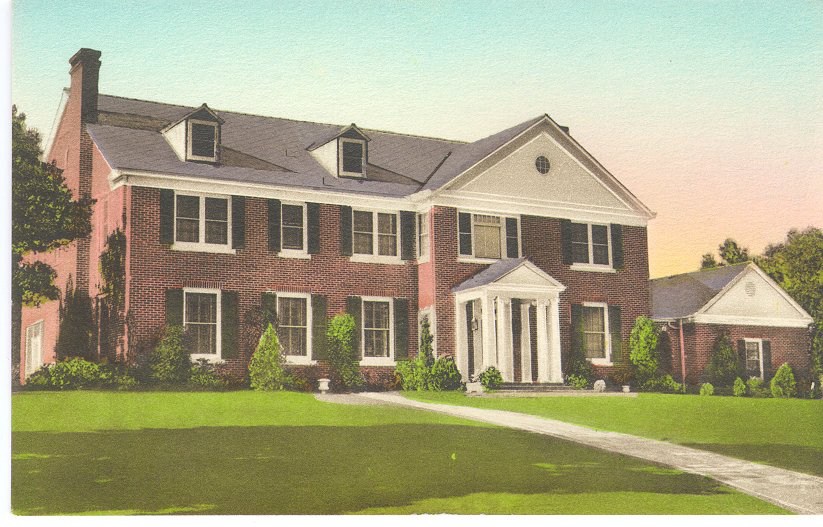
The iconic 1937 Florida Southern College building, which once served as the home of the college’s presidents and their families, from Ludd Spivey to Anne Kerr, has sat vacant since 2017. In Dec. 2025, it was announced that preservationist Gregory Fancelli plans to relocate the structure across Lake Hollingsworth Drive and restore it as a private residence.
Although news of the move first surfaced late last semester, officials now confirm that the preservation team’s planning process is well underway, making it increasingly unlikely that the project will fall through.
Construction on FSC’s President’s Residence began in spring of 1937 and was completed later that summer. Designed by architect Frederick Trimble, whose work also includes Joseph-Reynolds, Allan Spivey and Edge Halls, the home has long been a central visual and cultural fixture on campus. Overlooking Lake Hollingsworth, the residence has hosted presidential families, student gatherings and campus events for nearly nine decades.
After former President Anne Kerr moved out in 2017 due to needed repairs and ongoing deterioration, the college began evaluating the building’s future. Terry Dennis, vice president for business affairs and finance, explained that discussions about the home began even before Dr. Kerr announced her retirement.
“We did a lot of research on the house,” Dennis said. “It’s a beautiful exterior building. If you look at it from the outside, it is wonderful. It’s right in the center of campus, right on the lake. People who don’t know much about the campus but drive along Lake Hollingsworth Drive still recognize it as the president’s house.”
However, bringing the home up to current codes and modern standards proved costly. The college explored repairing it as a presidential residence, converting it into office space, or potentially using it as an alumni center. None of those options were financially practical.
“There were some pretty high costs to change the interior, bring it up to current codes, and make it something a new president would want to move into,” Dennis said.
Converting it into offices would have cost even more due to updated fire codes, elevator access, and sprinkler requirements. Dennis also noted that many modern college presidents — especially those with young families — prefer more privacy than a campus residence offers, particularly one visible from the Polk Science Building. The home has also frequently hosted large events, which may not suit future presidents’ needs.
“No one knew what was going to happen with the future president,” Dennis said. “Do we spend a fortune fixing it and then not hire someone who wants to live right in the middle of campus?”
As a result, the building sat vacant for several years while the college waited to determine its best use.
Before Dr. Kerr’s retirement, the college was approached by local preservationist Gregory Fancelli about restoring and relocating the home. However, the logistics and planning required years before the plan could be made public.
Homes at 14 and 16 Lake Hollingsworth Drive were purchased in April by Ludd Spivey LLC, a company connected to Fancelli. The houses were demolished in late 2025 to create space for the relocated President’s Residence. While the arrangement was largely confirmed by the end of 2025, Dennis acknowledged that there was still a small possibility the project could fall through.
“Things can still fall apart,” Dennis said. “They could find out it won’t fit where they’re trying to put it, or there’s some problem with moving it. But everybody’s on board for this to happen.”
Currently, the preservation team is conducting soil studies and other necessary testing to determine whether the new property can support the structure. Plans involve moving the house in sections and potentially rebuilding portions once relocated.
In the meantime, FSC has continued to maintain the building, to prevent further deterioration while awaiting final approval from the preservationist.
Once testing is complete and the land is approved, the relocation will move forward as a collaborative effort between the college and Ludd Spivey LLC. Dennis, who previously served six years on the local preservation board, emphasized the significance of saving the structure. “It is a win-win if we can save the house,” he said. “And it’s going to be used again for what it was originally built to be, a residential home.”
As for the future of the land the building currently occupies, no final decision has been made. Dennis suggested that an academic building may make the most sense, particularly as departments evolve and some older academic buildings require renovation. However, any future building would likely depend on donor interest and institutional priorities.
“It depends on the president and advancement office putting a list of needs in front of potential supporters,” Dennis said. “Which one fits the best, where?”
Another possibility is additional residential space. If enrollment continues to grow, an additional dormitory could be considered.
If relocation proceeds during the academic year, students may have the opportunity to witness the historic move firsthand.
“If we’re fortunate enough to have the house picked up and moved during the school year, students will be able to watch it,” Dennis said. “That’s a really neat thing to see.”
For now, the future of both the house and the land remains dependent on final testing and approvals. What is clear, however, is that demolition was never the goal.
If successful, the relocation will preserve one of Florida Southern’s most recognizable historic structures while opening the door to new possibilities for the campus’s largest remaining green space.