Isabella Kostik
Staff Writer
For over a decade, Marvel movies have dominated the film industry. From the release of Iron Man in 2008 all the way up to Avengers: Endgame in 2019, the Marvel cinematic universe became one of the most successful franchises in history, earning over $30 billion globally. But since Endgame, it’s felt like the general quality of the MCU has been going downhill. With such a high output of films and shows each varying in quality, audiences aren’t showing up for every new release anymore.
Marvel holds a lot of value in cultural influence. Even if you aren’t super involved in the superhero fandom, you often still hear something about whatever the latest Marvel thing is. These films have brought people together, created shared experiences and introduced audiences to characters and stories that might not have been seen in film prior. The reason why Endgame worked so well was because audiences were invested in these characters and their storylines and wanted to see how everything would come together and conclude.
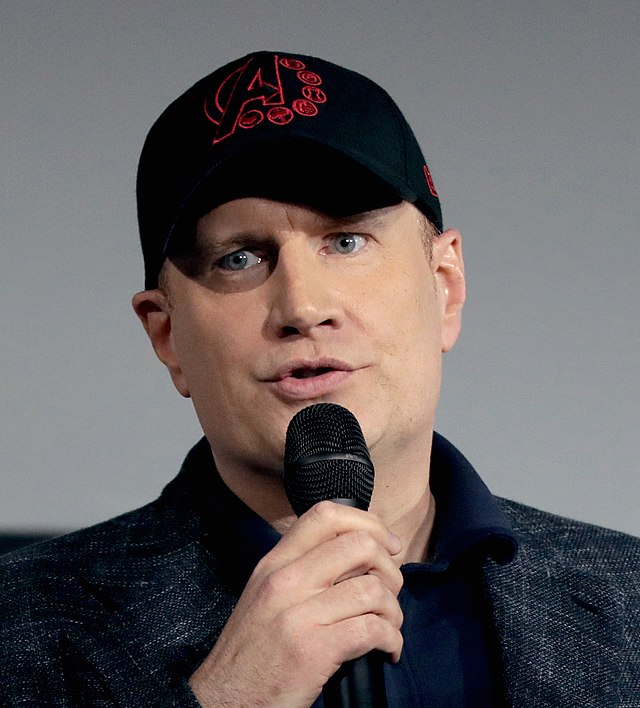
Recent movies like Fantastic Four: First Steps, Deadpool and Wolverine and Spider-Man: No Way Home prove that there is still interest in the Marvel brand, with each film performing very well at the box office. It’s these successes that tell Marvel to keep doing more, which is how we’ve ended up with 37 films and 18 television shows. These numbers will only continue to grow, with President of Marvel Studios Kevin Feige saying that they have plans to create content up to 2032, according to Variety.
Although many modern MCU projects are successful, it’s not a guarantee. According to Slash Film, 2025 marked the first time since 2012 that no Marvel movies ranked in the global top 10 box office earnings. In 2023, The Marvel’s became the MCU’s first box office flop and least profitable film, where it only grossed $200 million against a $375 million budget. Although no other film has lost this much money, Captain America: Brave New World’s $415 million and Thunderbolts* $382 million in earnings are still far cries from the numbers the MCU used to pull.
Each of the four currently released Avengers films have at minimum earned at least $1.4 billion, with Infinity War and Endgame bringing home $2 billion and $2.8 billion, respectively. Even the non-major team-up movies put up some impressive numbers, like Doctor Strange with $677 million, Ant-Man and the Wasp with $622 million and Captain America: The Winter Soldier at $714 million. Marvel won’t be going broke anytime soon, but the disparities in these box office numbers from before and after Endgame reveal that they have lost a portion of their original audience.
Part of this drop-off is most likely in part to the sheer amount of content there is to keep up with. Compared to the earlier MCU where you only had to watch, at most, two two-hour movies per year to stay up-to-date with the story, the modern MCU demands more. Since 2019, there have been 16 films and 18 shows released. Compare this to the 22 movies that were released from 2008 to 2019 and you’ll see that the pace has picked up considerably.
Most of these projects are also pretty independent of one another. The events of Thunderbolts* somehow has no effect on any other characters that exist in the same setting, like Spider-Man and Daredevil. The interconnectedness the MCU used to have with every movie just isn’t there anymore, and it’s hard to know what’s actually important to the overarching story.
This is something that Disney and Marvel are aware of. According to an article from Variety, Former CEO of Disney Bob Iger spoke about being disappointed in how recent projects have performed, where he cited Marvel as an example.
“[Marvel] had not been in the TV business at any significant level,” Iger said. “Not only did they increase their movie output, but they ended up making a number of television series, and frankly, it diluted focus and attention. That is, I think, more of the cause than anything.”
While the MCU has been in a rough patch since Endgame, I don’t think that means it’s time for Marvel to stop making movies. Ending the MCU completely would ignore the fact that there is still an audience and potential for great storytelling. In order to keep that audience and to further expand it, Marvel does need to change their approach. Instead of releasing multiple films and shows every year, the studio should focus on fewer, higher quality projects. By slowing down and prioritizing storytelling over quantity, Marvel could rebuild excitement and make each release feel like an event again.