Kennedy Owens
Staff Writer
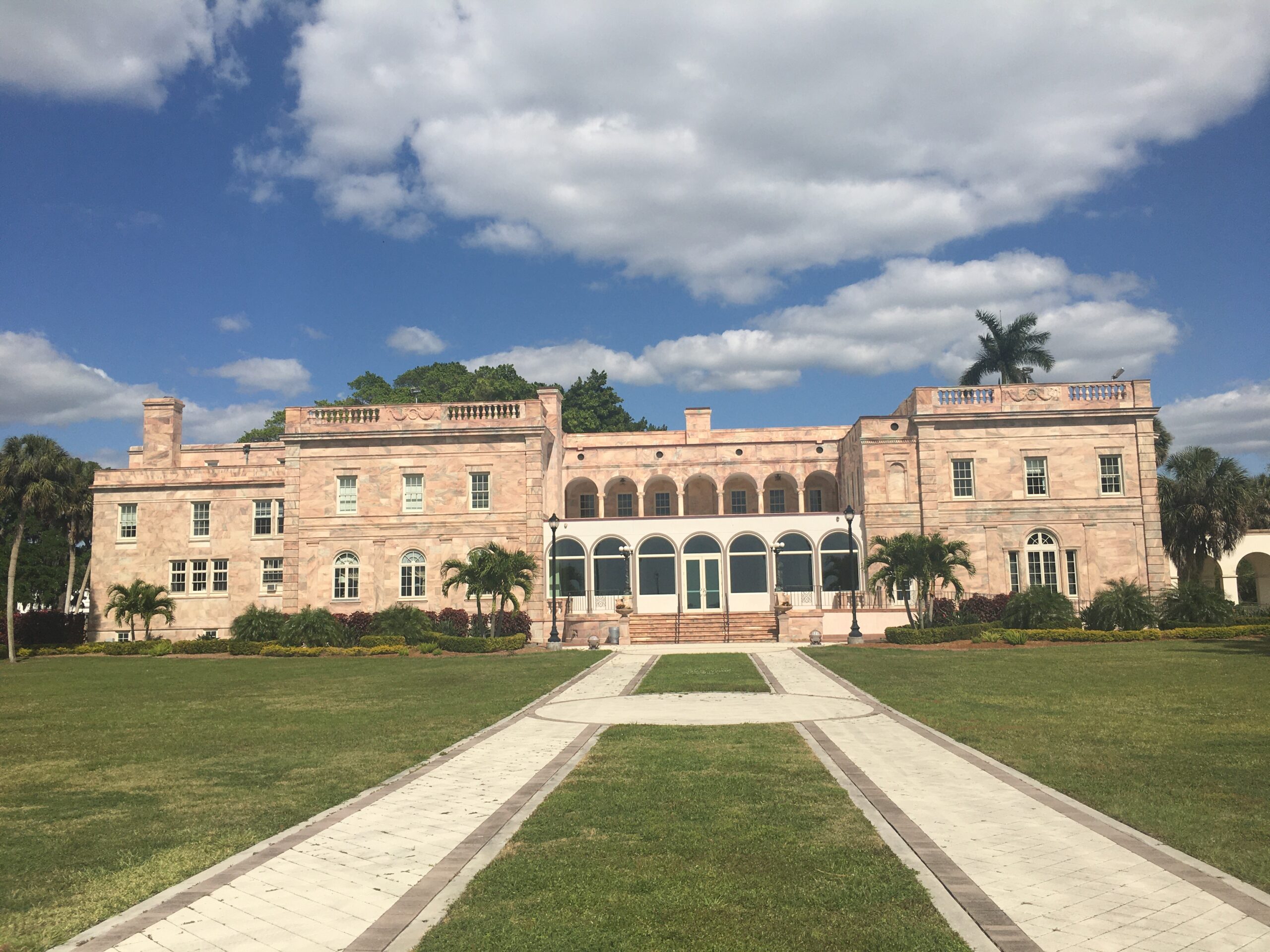
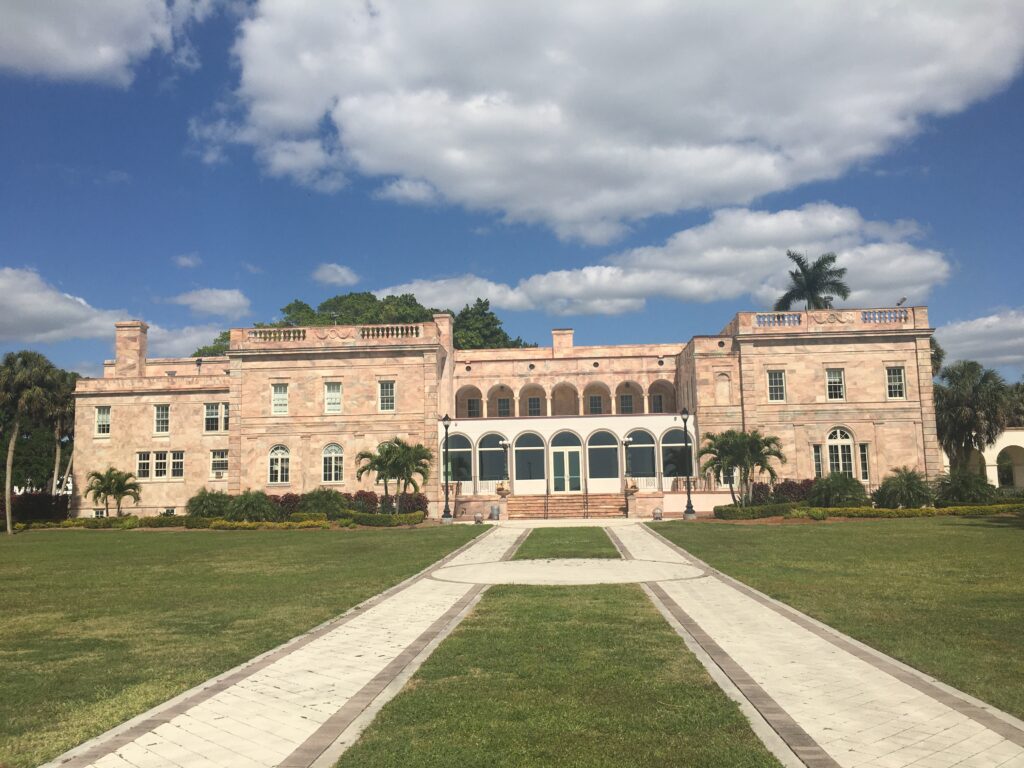
The New College of Florida became the first school to sign the Trump Administration’s Compact for Academic Excellence in Higher Education. As reported by the New York Times on Oct. 28, 2025, the college is embracing this partnership as a move to help maintain the U.S. as a premier destination for higher education.
Other colleges considered for this agreement have been Dartmouth College, Brown University and the Massachusetts Institute of Technology. These institutions refused to publicly sign on for fear of academic dependence and censorship.

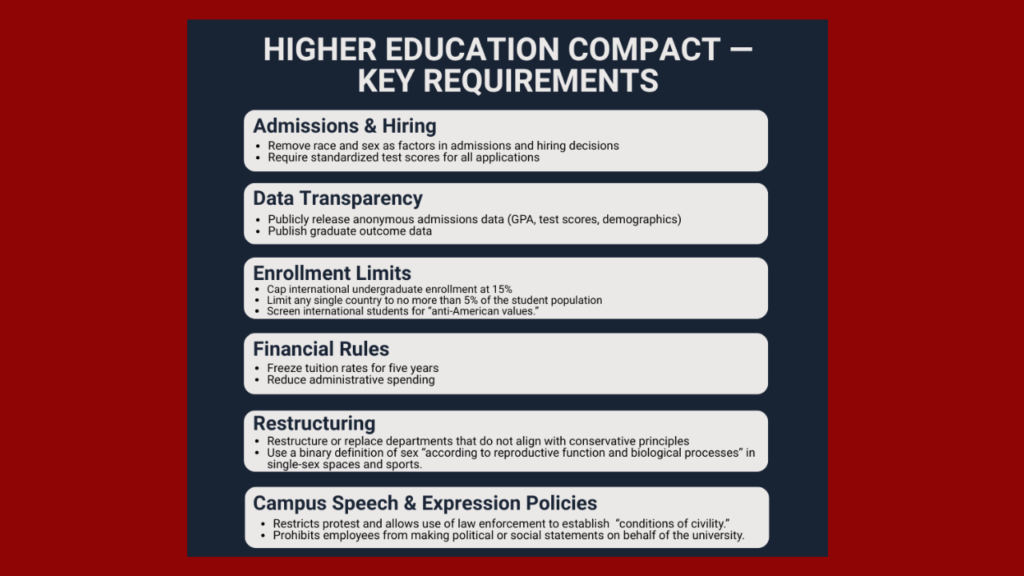
Under Trump’s compact, colleges would eliminate consideration of race and sex in hiring and admissions, while also publicly releasing anonymous admissions data such as GPA and test scores by demographic. The compact further requires standardized testing for applicants and places limits on international undergraduate enrollment—capping it at 15% overall, with no more than 5% from any single country. In addition, the agreement calls for a five-year tuition freeze, the reorganization of departments that conflict with the administration’s ideological vision, and a reduction in administrative costs, paired with greater transparency of graduate outcomes.
Richard Corcoran, the president of New College, mentioned in the compact’s cover letter that following the rules of the compact will give higher education preferential treatment in future federal funding plans. However, this decision would be in exchange for control of hiring processes, admissions and student campus life.
When asked about past Affirmative Action and DEI initiatives in an interview with The Hill, Corcoran stated that the compact would allow more open dialogue and a merit based system. This should be where a student’s success is supposedly not dependent on race, gender or sexual orientation.
In 2023, New College was restructured at the same time federal affirmative action and DEI policies were being reevaluated. In late January, Gov. Ron DeSantis announced in a press conference at State College of Florida Manatee-Sarasota that, “The mission has been I think more into the DEI, CRT, the gender ideology rather than what a liberal arts education should be,” before pledging between 10 to 15 million annually to the college if they agreed to “reforms.”

Students and professors offered a range of opinions when discussing whether college should intersect with politics. Member of the Florida Southern College Criminology Club, Mason Killingsworth, stated in an interview that students should feel free to get involved in on campus politics, but there should be caution towards government interference. “Our campus clubs [TPUSA, College Democrats/Republicans] do a great job in letting people explore their beliefs, and keeping it respectful in between themselves. That should be the limit, the choice up to the students and not the institution.”
Professor in the Florida Southern College Department of Communications, Dr. Joshua Jordan, also weighed in on the recent development. While he disagrees with the current administration, he isn’t completely opposed to government intervention in higher education.
“I think that I am very much for making sure that there are rules and guidelines that colleges have to follow. I think that we should be smart and thoughtful and democratic about what these rules and guidelines are,” Jordan said.
Killingsworth continued to reflect on the purpose of further government funding, stating, “Federal funding’s impact more or less depends on the school. State universities and some private schools can theoretically survive without it, whereas smaller schools would struggle,” he said. Killingsworth also notes that the government could use more funding as leverage against higher education.
Overall, while increased government funding in higher education may provide additional resources to colleges, the trade-off could involve reduced campus diversity and increased restrictions on expression. Administrators, faculty and students now wait to see how the agreement will influence the institution and other schools in the coming years.