Kamden Bailey
Staff Writer
Artificial Intelligence (AI) has become a popular topic in the last five years, as everyone has their own thoughts about it and how it should be used. AI has slowly been integrated into the classroom. With the rise of any AI tools people use to aid in their education, the question arises, what amount of AI use is too much? And how can it be used properly by students and teachers?
AI can be used to help students in many ways. Take Grammarly for example. It is used by many college students to help with grammar. It’s also used to help elaborate on topics they may need extra help on. The problem comes when students use AI in harmful ways.
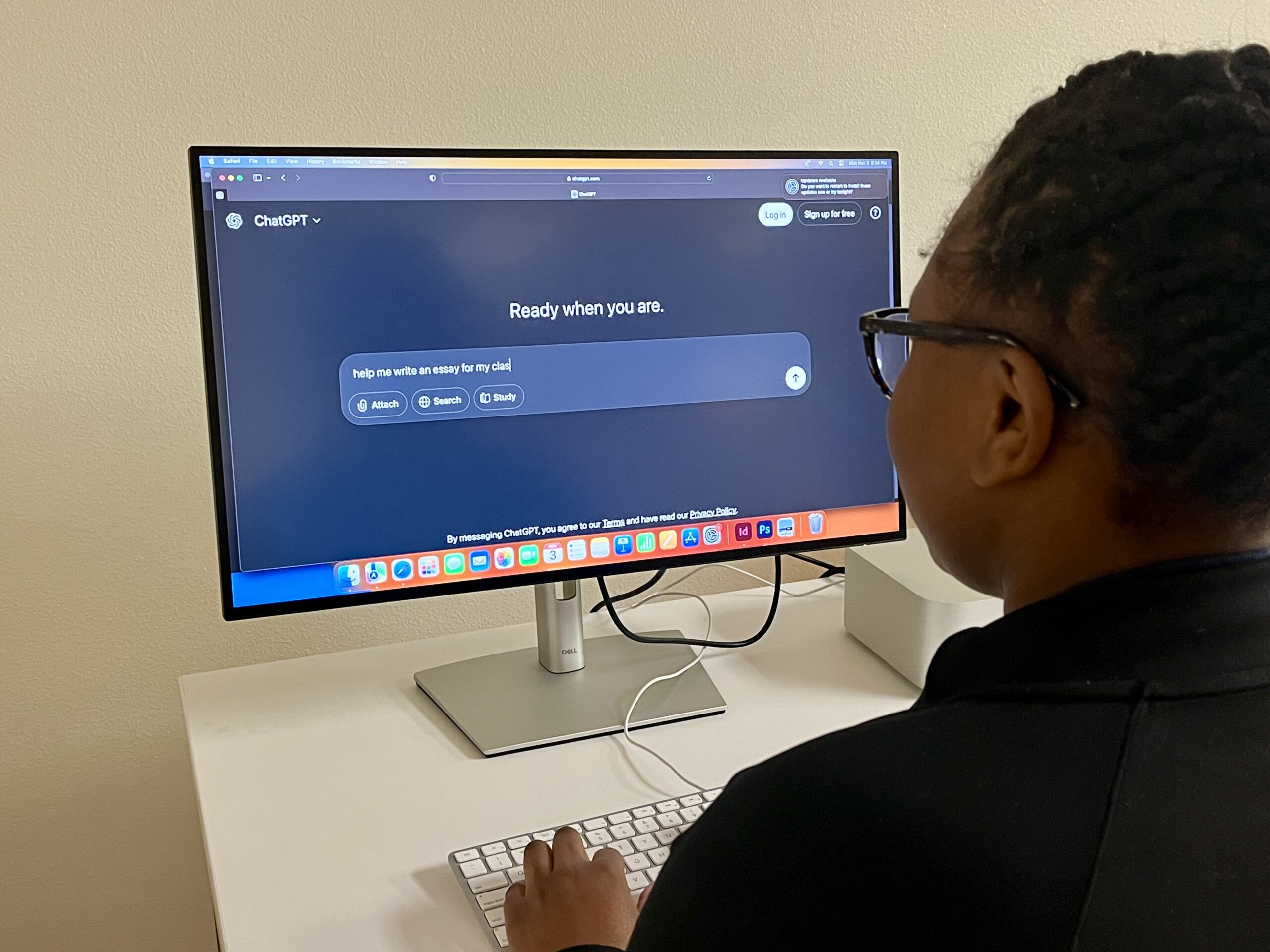
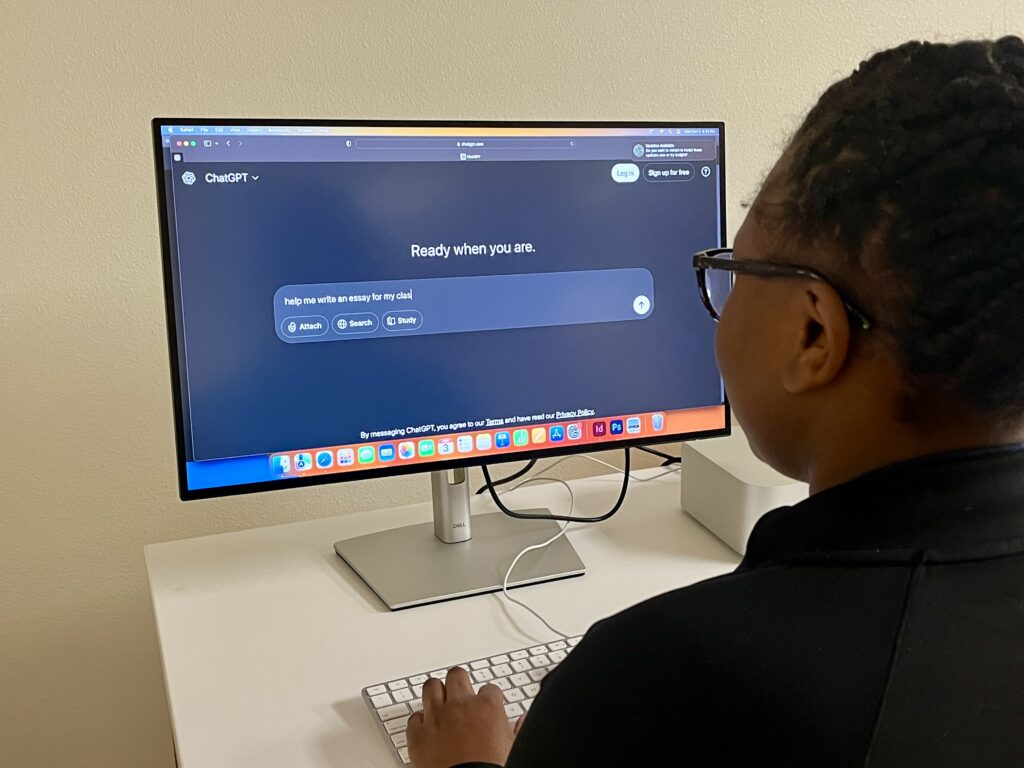
ChatGPT is by far the most popular AI tool among college students. According to an article published by Exploding Topics, more than 45% of ChatGPT users are under the age of 25. ChatGPT can be used to write anything a student might want. Students use ChatGPT to answer questions on assignments, and even white full papers with it.

When asked about regulations set on students regarding AI in the class room, Dr. Mijana Lockhard, Assistant Professor in the School of Education, stated that it depends on what assignment and also what class. She then went on to say, “We want eventually, our students to be able to use AI to lower their workload. But, before they can do that they actually need to know how to do it on their own,” Lockard said. She has more restrictions on her freshmen classes as opposed to her senior classes. She says that seniors have a higher capacity to take what the AI has produced and use it properly.
An article published by United Nations University (UNU) says “In an era where artificial intelligence (AI) is heralded as a cornerstone of innovation, examining the often overlooked distinction between accuracy and truthfulness is crucial,” AI has a tendency to get things wrong. While information AI can give you may be right, it might not have very much to do with the actual question at hand. Most teachers base their assignments, tests and quizzes on a textbook. Since the AI doesn’t have access to said textbook the answer it may give a student wouldn’t be exactly “correct.”
Lockhard also stated “ChatGPT, general! Very general! So, when you are developing something for education it’s not necessarily always correct. As a matter of fact, often it’s not correct.” Students must make sure what AI creates is correct. If they do not, there could be serious consequences. Students also must be aware of the fact of AI’s incorrectness and know what to do when AI produces something that might not align with the subject they are learing.
As AI continues to improve, and as it is funneled into the classroom, teachers have put all sorts of different regulations on their students regarding it’s use. AI can be used by college students to enhance their education and even lessen their workload. However, AI is not always correct. AI being used in the classroom is new, so teachers and students are now forced to grow with it.