Asher Gibbons
Sports Editor
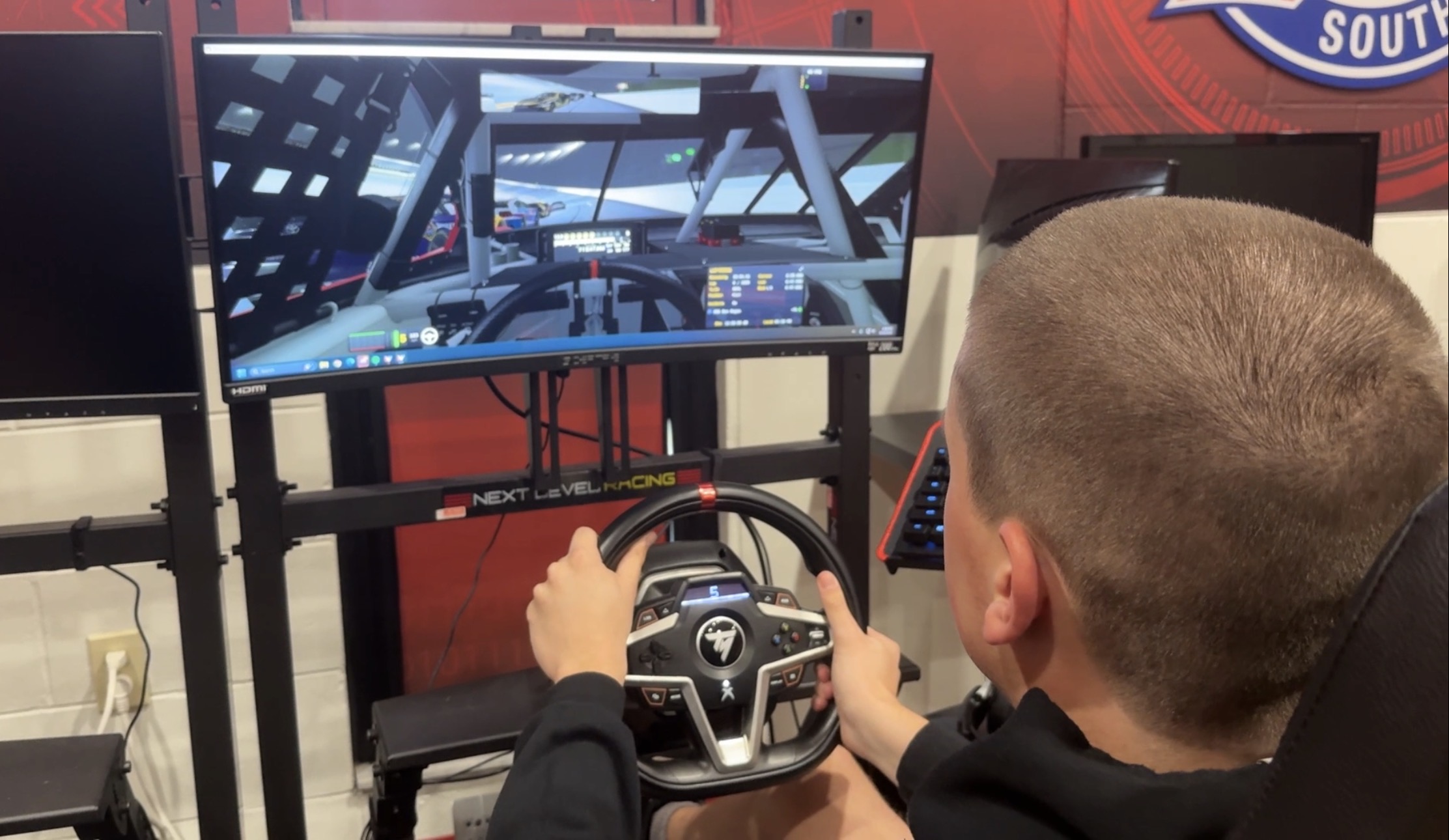
The Snakepit is an infamous spot on campus for Mocs Esports to compete on the big desk during live tournaments in games such as Rocket League, Overwatch or Marvel Rivals. There’s one person who’s always missing. The school’s lone simulation racer (sim racer).
Lakeland resident and freshman sim racer, Mason Killingsworth, fills that role up in the Esports Arena on the second floor of the Rogers building.
From the age of five, Killingsworth was a racing fanatic of his own accord, finding the fandom of NASCAR with little outside influence.
For the longest time, Killingsworth wanted to get behind the wheel of anything he could get his hands on. From the age of 10 to the age of 18, the top of his Christmas list was always either a go-kart or a race car. That remained a Christmas wish ungranted.
With no physical steering wheel to turn, Killingsworth looked to gaming to fulfill the dream. Any racing game he could find would crave his hunger whether that be NASCAR Heat, Asphalt Legends or even a Roblox motorsport.
Naturally, Killingsworth looked for his topics of interest in college and found that FSC competed in a NASCAR sanctioned racing sim, aptly named eNASCAR. So how does one get recruited to participate in sim racing? Send a message.
“I reached out to coach Paramore and he directed me to Colton, who was our iRacer last year.
We get to talking and I’m like, yeah, I have a little bit of experience, but not on iRacing. And then a week later, [Paramore asked] ‘hey man, you want a scholarship to do this?’” Killingsworth said.
With the previous sim racer exiting the program, Killingsworth was left to his own devices to figure out the machine. How did he figure it out?
“A lot of YouTube tutorials and a Metallica playlist for motivation,” he said.
The on-screen motorsport is similar to traditional racing. There’s a qualifying round, called time attack, where the top 120 racers advance. That’s the easy part. When skilled enough to get through the time attack, you then participate in two rounds of eliminations followed by semifinals. Then, and only then, are you a part of the 25 drivers in the official race.

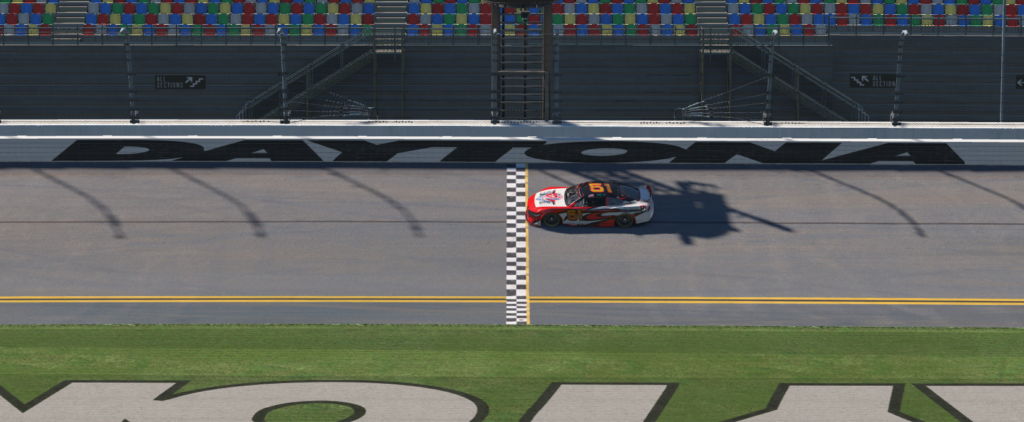
During the Daytona 500 time attack, Killingsworth spent seven consecutive hours behind the wheel and finished three hundredths of a second behind the leader. He placed 143rd.
“My eyes were so shot out. I had a big frickin’ migraine. My mind was everywhere.I went from listening to Talbot to Billy Graham’s sermons all night,” he said, recalling the event.
On average, Killingsworth spends seven hours a week practicing on the sim and has yet to qualify because of the hypercompetitive field of racers. For those who think each NASCAR track is the same, they’d be wrong.
There’s nuance in each track, where fuel management, tire management and racing strategy, such as precise times to enter corners, precise places to be on the track and bump drafting, come into play.
“So to get the best time possible, you have to be perfect with your turns. If you go too high in a corner, that’s where you screw you up,” Killingsworth said. “I’ll use Daytona as an example, you have to hug the yellow line as close as you can without going off it, or your tire is [going to bounce around]. And it has to be perfect. And you also can’t turn too much because you’ll lose speed.”
What started as a childhood dream of getting behind the wheel for the freshman is now a rewarding journey through learning the intricacies of a racing system all on his own. With each week comes improvement and even if it’s just a hundredth of a second, it makes all the difference.