Sheila Zapata & Addison Fisher Moore
Entertainment Editor & Staff Writer
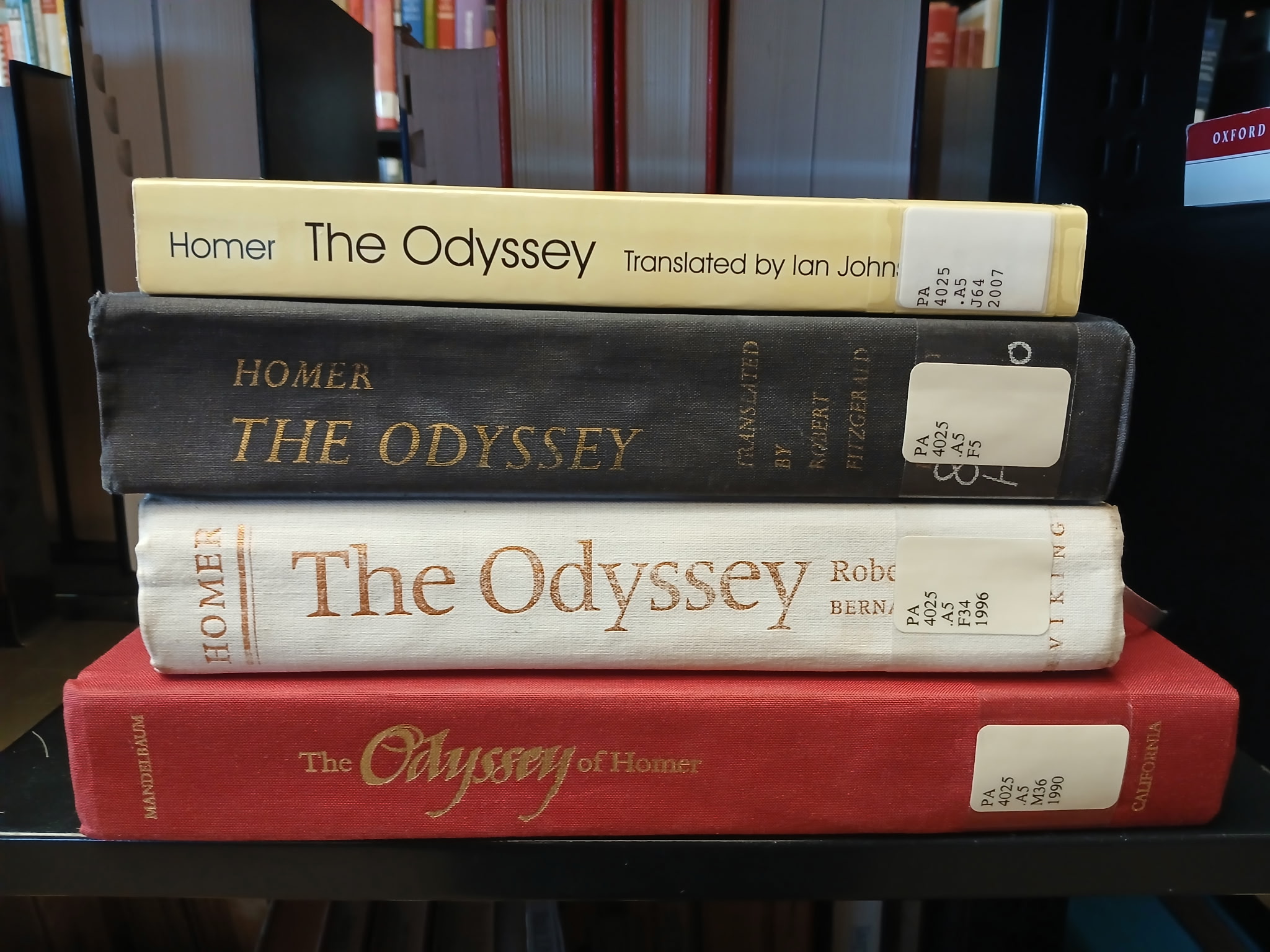
There has been a lot of tension surrounding Christopher Nolan’s “The Odyssey,” with strong opinions regarding the major plot points that were taken out and drastic character changes that differ from the Greek poet Homer’s version of “The Odyssey.” On the other hand, some viewers believe that Nolan had every right to take the creative liberty he did regarding his film.
Eliza Radford is a sophomore English writing and art history and museum studies major at FSC. When she entered her freshman year, she read “The Odyssey” for the second time in one of her English classes, and she considers herself well-versed in the story itself and the history behind it.
Radford was excited and looking forward to this movie, but after watching it, she was disappointed in how it turned out compared to the source material. “There were many aspects, especially over Odysseus’ character, that were completely left out, especially his wit,” Radford said.
Radford is referring to Odysseus’s encounter with Polyphemus, the cyclops, where he tells the monster his name is “Nobody,” which plays out in his favor later on when Odysseus blinds Polyphemus, and the monster tells the other Cyclops that “Nobody” is hurting him.
Audiences also miss out on the flaws Odysseus has. Nolan’s Odysseus seems to be this “perfect” man when he’s not.
“When Odysseus and his crew were fleeing the Cyclops, he called out to the Cyclops, and he said, ‘I’m Odysseus of Ithaca,’ which became his downfall,” Radford said.
These moments are crucial to Odysseus’ character, showcasing his wit and flaws, which Nolan removed. Honestly, Odysseus’s character would be a completely different and rather better character if these aspects stayed.
Another note Radford speaks about is the environment: “I wish that there was actually more Greek architecture, Greek temples, and more color,” she said.
Ancient Greece was a place where color was vibrant, and Greek statues used to be painted to make them pop in cities such as Ithaca. We are shown a lot of dull, dark and monochrome colors, which is very Christopher Nolan, but not very ancient Greece.
Aside from Radford’s input, others had strong opinions on Nolan’s film. The author of the “The Odyssey” version the film is based on, Emily Wilson, a British-American scholar of classical studies and department chair of classical studies at the University of Pennsylvania. She also produced the 2017 translation of the epic and, according to an article from The Guardian, she hoped this film might’ve “pushed Nolan’s creative heights,” but instead, “the film’s vision is too confused, its characters too underdeveloped, to deliver what is half-promised in terms of big ideas,” she said.
In addition to Radford’s thoughts, Dr. Keith Huneycutt, a professor in the english department at FSC, was kind enough to sit down and explain his thoughts about the movie adaptation. He is particularly passionate about world literature, teaching a Masterpieces of World Literature class almost every semester. He saw the movie and expressed that it was a good attempt at representing the epic. He appreciated the casting choices and thought that the monster execution was fairly well done.
“I’m willing to overlook, because of the overall great effort that was put into the film and… just any representation of that poem that gets people talking about it and reading it, I think it’s worthwhile.” Despite his complaints, he states that he still thoroughly enjoyed the movie for what it represented.
When asked about the alterations from the poem to the movie, he mentioned quite a few that frustrated him. Similar to Radford’s opinions, Dr. Huneycutt was also frustrated about the removal of the “Nobody” scene and the portrayal of the cyclops.
“Yeah, and the greatest line in the poem, maybe in any Greek, Ancient Greek literature, was thrown away,” he said.
This line is part of the reason why Odysseus is considered the wisest of the Greek heroes—without it, not only is one of the greatest lines in Greek literature lost, but also one of the reasons that makes Odysseus such a special character.
The one character whose portrayal he truly didn’t like was that of the witch, Circe. Dr. Huneycutt describes Circe as an impressive, magnificent goddess. In the movie, however, Nolan had turned her beautiful palace into a one-room shed, seemingly downplaying her importance.
Instead of expanding on someone like Circe in the adaptation, Nolan also brought in works by other authors—notably “The Iliad” (also attributed to Homer), “Aeneid” (by Virgil), and “Agamemnon” (by Aeschylus).
Dr. Huneycutt was less frustrated about the expansion into the other works, instead being frustrated by what little was added in.
“But since he’s [Odysseus] in Hades, why don’t we see Achilles? … Why never mention Achilles? If they’re going to mention all of the other stuff from The Iliad, especially so much emphasis on Agamemnon, why not mention Achilles at all?”
Overall, Dr. Huneycutt had an extremely mixed opinion on the film. While he felt that there were many discrepancies between the original poem and the movie, he is also extremely appreciative of all the brand new eyes it brought to the original poem.
“If I hadn’t read ‘The Odyssey,’ none of that would bother me at all.”
Ultimately, we need to ask ourselves: is Nolan’s adaptation of “The Odyssey” bad? No, it’s not, but it’s not “The Odyssey.”
From people who have extensive knowledge of the history and literature surrounding ancient Greece, Nolan didn’t come close to depicting any of it.
Odysseus’ character was nothing like “The Odyssey,” which is named the wisest Greek hero, and people can argue that Nolan’s ending defeated the whole purpose of “The Odyssey.”
That being said, it’s not a bad movie in itself, and it could become influential on society when it comes to learning about classic Greek literature.
Film is all about creative liberty, but how accurate could it truly be if the source material isn’t prioritized?